
Can you predict human behavior in a useful way for engineering Design?
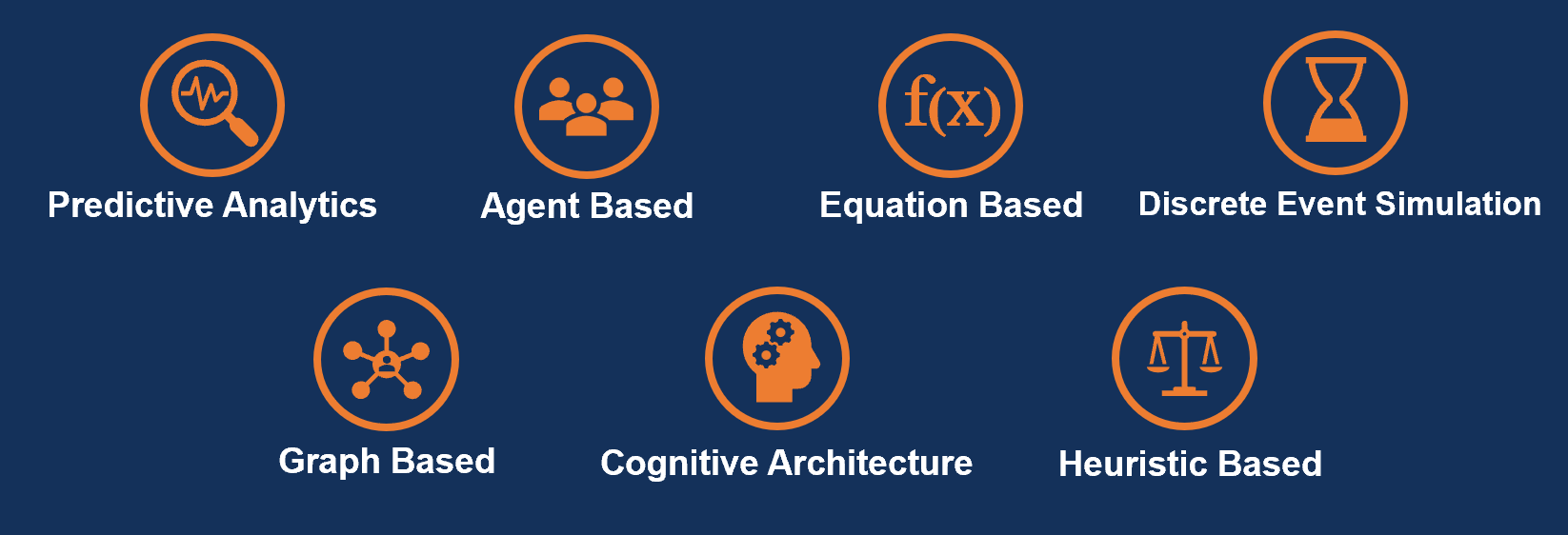
Yes! tHis paper describes and categorizes 7 classes of predictive models of human behavior and connects them to 4 stages of the engineering design process.
During early-stage design, ideation methods generate candidate solutions in response to a set of needs. This paper builds on the idea that solution ideas consist of two parts — tactics (the deliberate actions that employ available means to reach an objective) and technology — and that "complete" ideas containing both are generally preferable for further development. Prior work suggested that explicitly considering tactics helps teams explore the design space more fully.
The authors introduce a new ideation technique, the Random Prompts Method, and compare its performance against an adapted Brainwriting Method in a controlled ideation experiment. They also test whether briefly teaching participants about the tactics/technology distinction changes the character of the ideas produced.
Results show that brief instruction on tactics substantially increased the fraction of generated ideas containing explicit tactics (relative to sample idea sets from the literature), and that the Random Prompts Method produced more novel ideas than the Brainwriting Method, outperforming it on several design-space-exploration metrics. The study also confirmed that "complete" ideas (tactics + technology) tend to be more novel than incomplete ones, and offers techniques for generating more complete ideas.
Cite this paper
APA
Ashworth, T. J., Sorensen, C. D., Anderson, M. L., & Mattson, C. A. (2026). The random prompts method: A novel ideation method for improving tactics ideation. Research in Engineering Design, 37(2). https://doi.org/10.1007/s00163-026-00479-z
MLA
Ashworth, Thomas J., et al. "The Random Prompts Method: A Novel Ideation Method for Improving Tactics Ideation." Research in Engineering Design, vol. 37, no. 2, 2026, doi:10.1007/s00163-026-00479-z.
Chicago (Author-Date)
Ashworth, Thomas J., Carl D. Sorensen, Michael L. Anderson, and Christopher A. Mattson. 2026. "The Random Prompts Method: A Novel Ideation Method for Improving Tactics Ideation." Research in Engineering Design 37 (2). https://doi.org/10.1007/s00163-026-00479-z.
IEEE
T. J. Ashworth, C. D. Sorensen, M. L. Anderson, and C. A. Mattson, "The random prompts method: A novel ideation method for improving tactics ideation," Research in Engineering Design, vol. 37, no. 2, 2026, doi: 10.1007/s00163-026-00479-z.
BibTeX
@article{ashworth2026random,
  author  = {Ashworth, Thomas J. and Sorensen, Carl D. and Anderson, Michael L. and Mattson, Christopher A.},
  title   = {The Random Prompts Method: A Novel Ideation Method for Improving Tactics Ideation},
  journal = {Research in Engineering Design},
  volume  = {37},
  number  = {2},
  year    = {2026},
  doi     = {10.1007/s00163-026-00479-z}
}